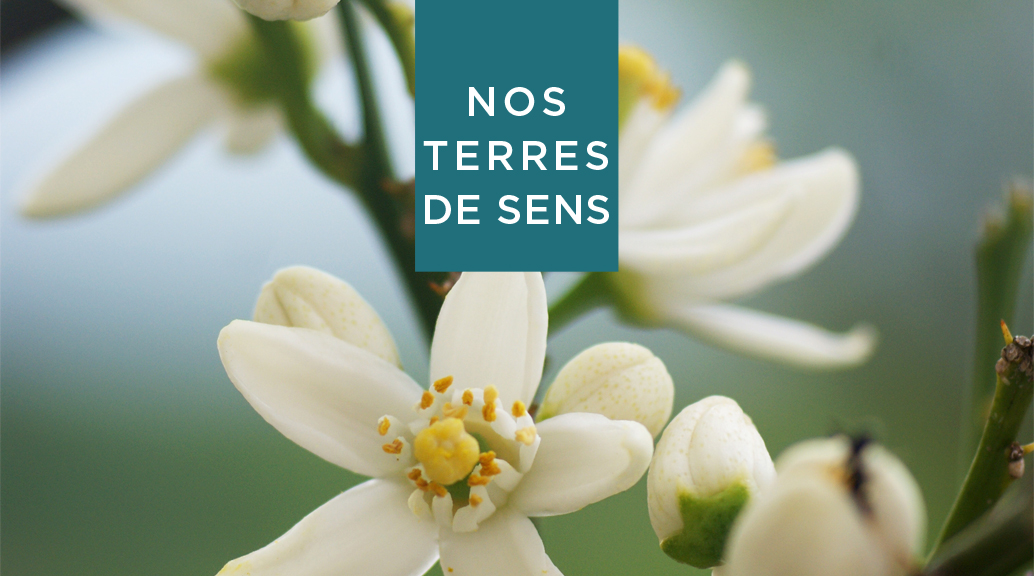
Our Lands of the Senses I Episode 3: The Orange Blossom, France, Tunisia & Egypt
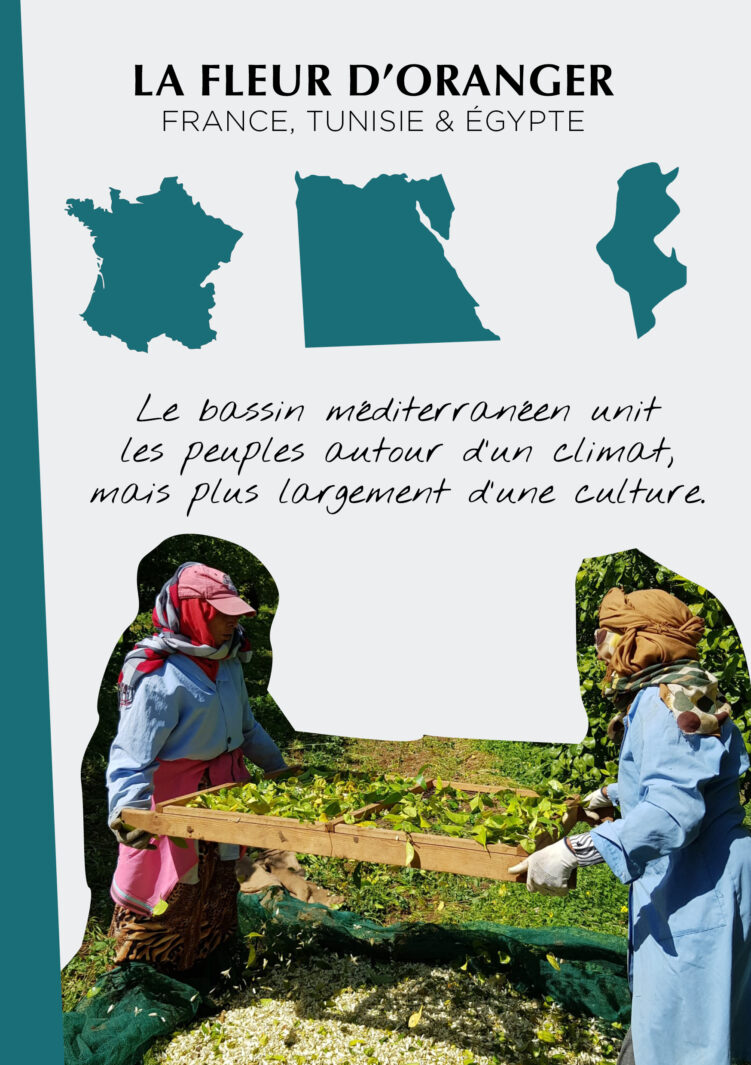
The Mediterranean basin unites people around a climate, but more broadly around a culture, scents and tastes, and therefore agricultural products.
Orange blossom is one of these emblematic materials. Noble and unmissable, it is highly sought after and appreciated all over the world. Grown in several Mediterranean countries, its products and co-products differ significantly from one production area to another, due to the well-known terroir effect of citrus fruits.
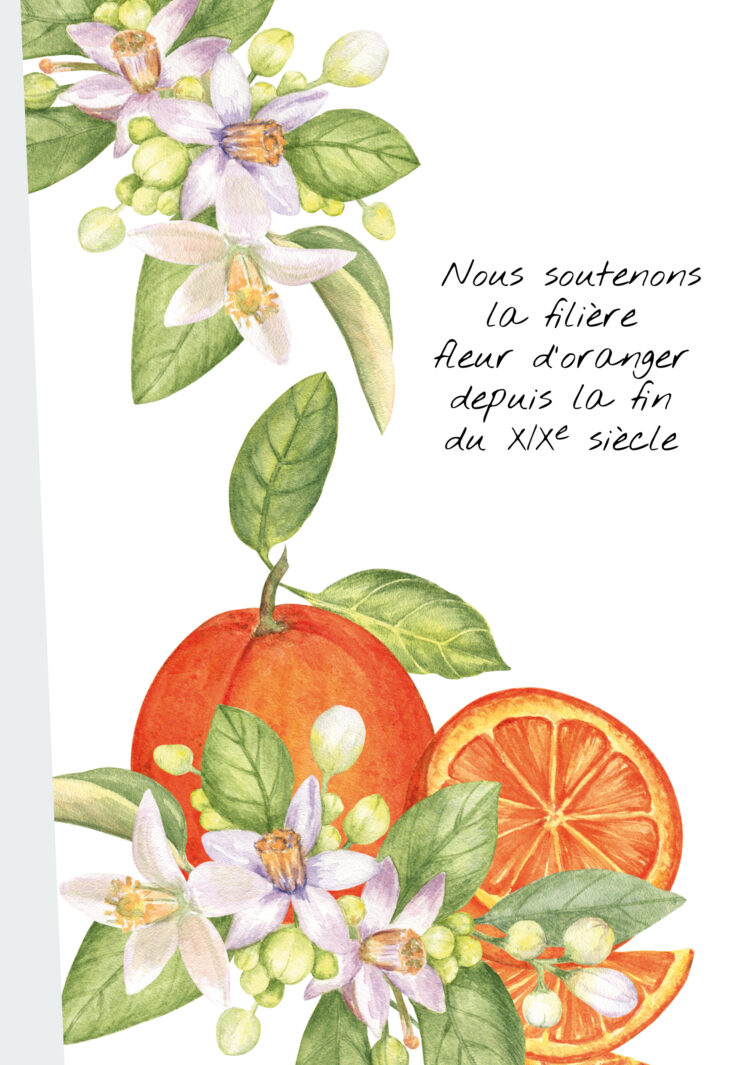
Jean GAZIGNAIRE – Groupe MUL ‘s commitment to supporting the orange blossom sector dates back to the end of the nineteenth century, when the Pays de Grasse was the world’s largest producer of neroli, the essential oil of orange blossom. This historical link led us to set up an ambitious project in 2018 to develop the bitter orange sector (or “bitter orange tree”, on which orange blossom is produced) in the Pays de Grasse, in partnership with the main player in the sector, the agricultural cooperative Nerolium. Many actions have been put in place, such as the conversion of the cooperative to organic farming, the development of co-products, the replanting of more than a thousand trees, and the conduct of research and development trials on the varietal.
In Tunisia, in the Cap Bon region, our sector, which has been the result of a decades-long partnership, is now certified Organic Agriculture, UEBT and Fair For Life. Orange blossom is grown in the orchards by three hundred small producers, trained in the best agricultural, social and environmental practices, allowing us to sublimate this traditional know-how.
In Egypt, in the Nile Delta, our sector is based on a partnership with a producer who cultivates his own plots, certified Organic Agriculture and UEBT. We work with them to promote environmental and social innovation programs.
Thus, from the beginning of March to the beginning of May, the harvests follow one another from Egypt to Tunisia, to conclude in France.
The mild and sunny climates of the Pays de Grasse and Cap Bon favour fine and floral notes preserved in our extracts. These profiles are particularly sought after for application in perfumery.
The warmer and drier climate of the Nile Delta develops a more intense, more direct extract, which is more widely used in food.
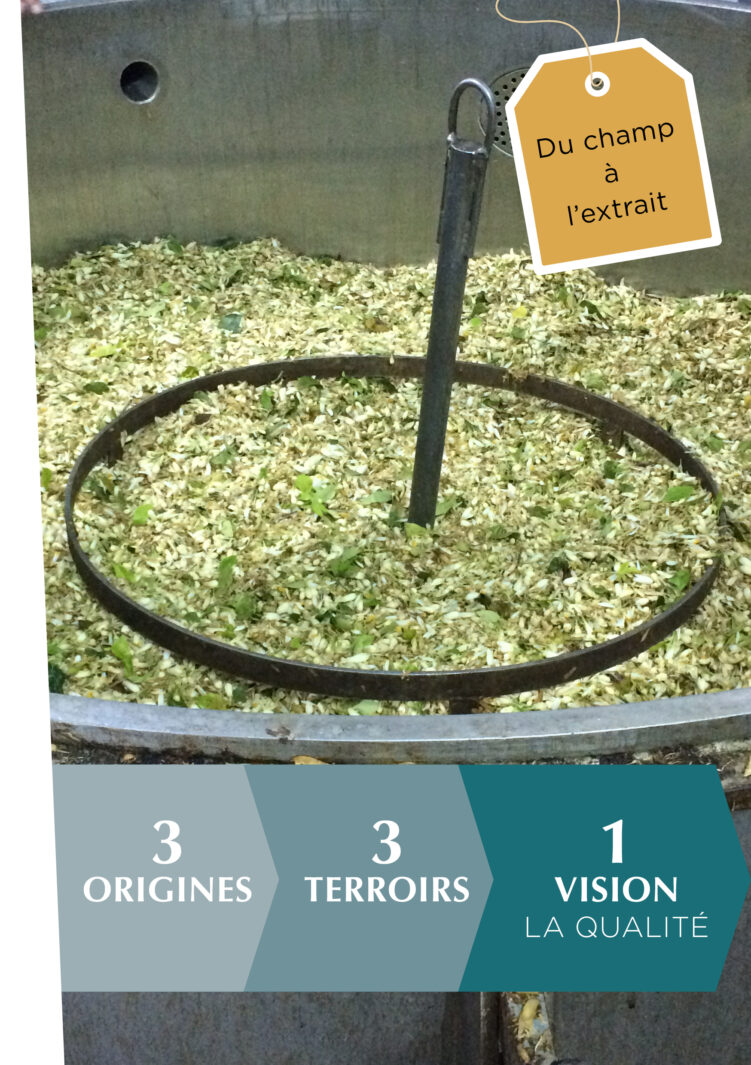
Three origins, three terroirs, but a common vision: the quality of the raw materials, from the field to the extract.