

A Purpose, a Way of Doing

In the 1970s, our group diversified itself into extraction and distillation in order to secure new markets for our historic agricultural activity. If the farmer needed to become an industrialist in order to survive, today it is the industrialist, which we have become, who needs his agricultural roots to meet the demand of our customers in terms of product quality, certified and traced origin, from the plant to the aromatic extracts. Quality today should no longer be only product quality, but the Quality of the conditions surrounding production, social and environmental conditions; with men in the centre. Developing our activities is therefore organized around these pillars at regional level, in France and through our partnerships abroad on our supply chain. More than a Purpose, it must be our Way of Doing, of producing and of committing ourselves to sustainable development.
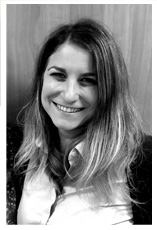
Cécile Mul
Cécile Mul
Droits de l'homme

Human
Rights

Normes internationales du travail

International
Labour Standards

Environnement

Environment

Lutte contre la corruption

Fight against
corruption

Sustainable Development and CSR Approach

The commitments carried out by the MUL Group are part of a sustainable development approach, with strong integration in its territory. In terms of social and societal responsibility, the Group’s actions aim to support issues of general interest such as training, access to employment for women, or participating in the 17 Sustainable Development Goals of the United Nations Global Alliance.


COP (Communication On Progress) 2025

The Group pays particular attention to the management of its teams and people through its supply chains; and is committed through its social policy to implement and develop responsible human resources management.

Farmer for 5 generations, the group reaffirms its commitment to sustainable development and joins 4p1000 Initiative in 2020.

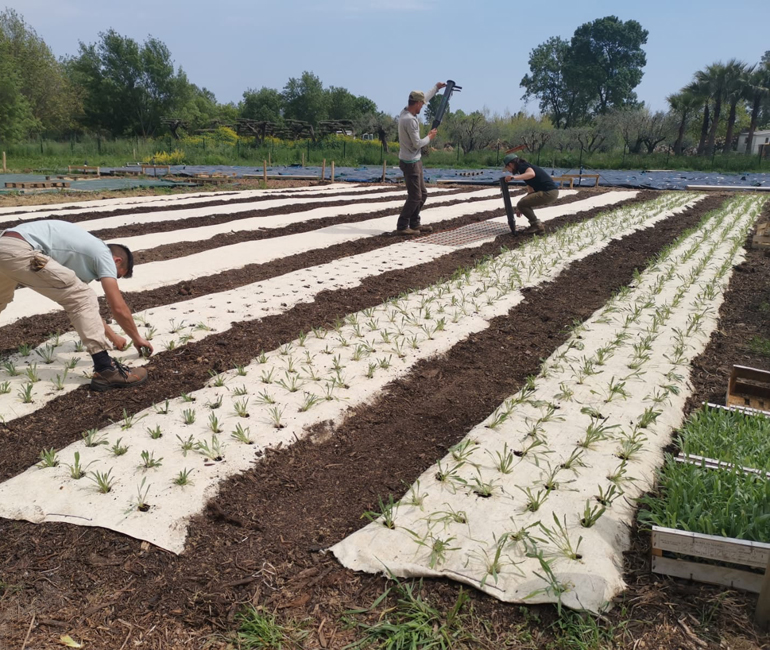
In our agricultural programs in France and abroad, we experiment and implement agroecological practices related to the carbon cycle in our ecosystems such as composting, non-tillage, agroforestry, syntropic agriculture, regenerative techniques and developing biodiversity.

  • A commitment in food safety, securing our plant sectors, for the climate.
  • Reasoned and committed cultures to maintain principles and enhancing biological diversity.
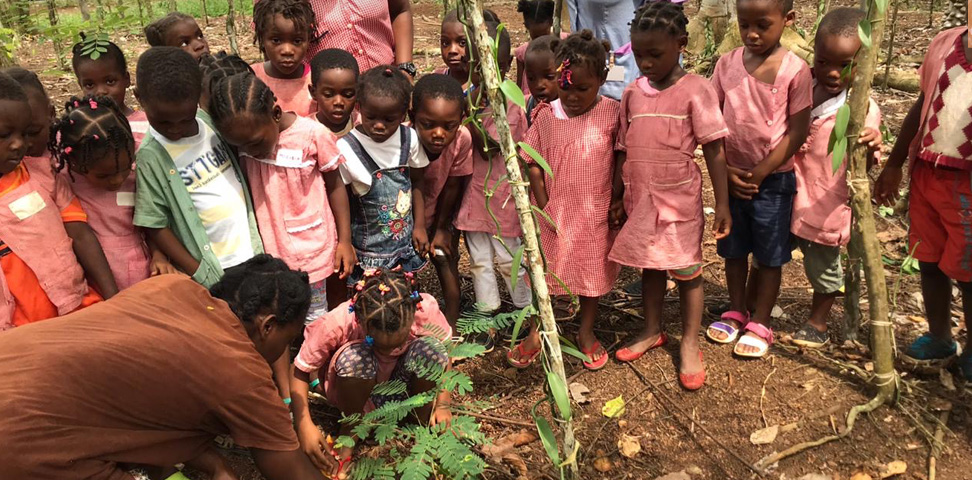
  • Support for local initiatives on Environnemental Education.
  • In setting program: cultivation programs which are part of a balance with the ecosystem by engaging in integrated and transformative socio-economic and environmental projects.

Farmer for 5 generations, the group reaffirms its commitment to sustainable development and joins 4p1000 Initiative in 2020.

In our agricultural programs in France and abroad, we experiment and implement agroecological practices related to the carbon cycle in our ecosystems such as composting, non-tillage, agroforestry, syntropic agriculture, regenerative techniques and developing biodiversity.

  • A commitment in food safety, securing our plant sectors, for the climate.
  • Reasoned and committed cultures to maintain principles and enhancing biological diversity.
  • Support for local initiatives on Environnemental Education.
  • In setting program: cultivation programs which are part of a balance with the ecosystem by engaging in integrated and transformative socio-economic and environmental projects.

sustainable development
Social issues at the centre of our value chains
Engagement RSE

CIRCULAR ECONOMY AND RESOURCE RECOVERY

Groupe MUL develops resource recovery initiatives throughout its agricultural and industrial value chains in order to reduce environmental impacts and promote a circular economy.

GREEN WASTE, DOWNSTREAM OF AGRICULTURAL OPERATIONS

  • Recovery of agricultural pruning wood for use in the flavour and fragrance industry.
  • Composting and reuse of organic matter in agricultural plots to promote soil fertility.

CO-PRODUCTS DOWNSTREAM OF THE FLAVOUR AND FRAGRANCE INDUSTRY

  • Reduction of environmental impact and promotion of best practices.
  • Identification and recovery of natural compounds still present in biomass for applications in the cosmetics and pharmaceutical industries.

SORTING AND RECYCLING ACROSS OUR SITES AND SUPPLY CHAINS

 Implementation of sorting, recycling and resource recovery initiatives across all our activities.